 by
Most kids can do far more around the house than we ask of them. A 3-year-old can put toys away, an 8-year-old can load the dishwasher, and a 12-year-old can cook a simple dinner that won’t poison the family. Here is what’s realistic at each age, with the jobs that are worth teaching first.
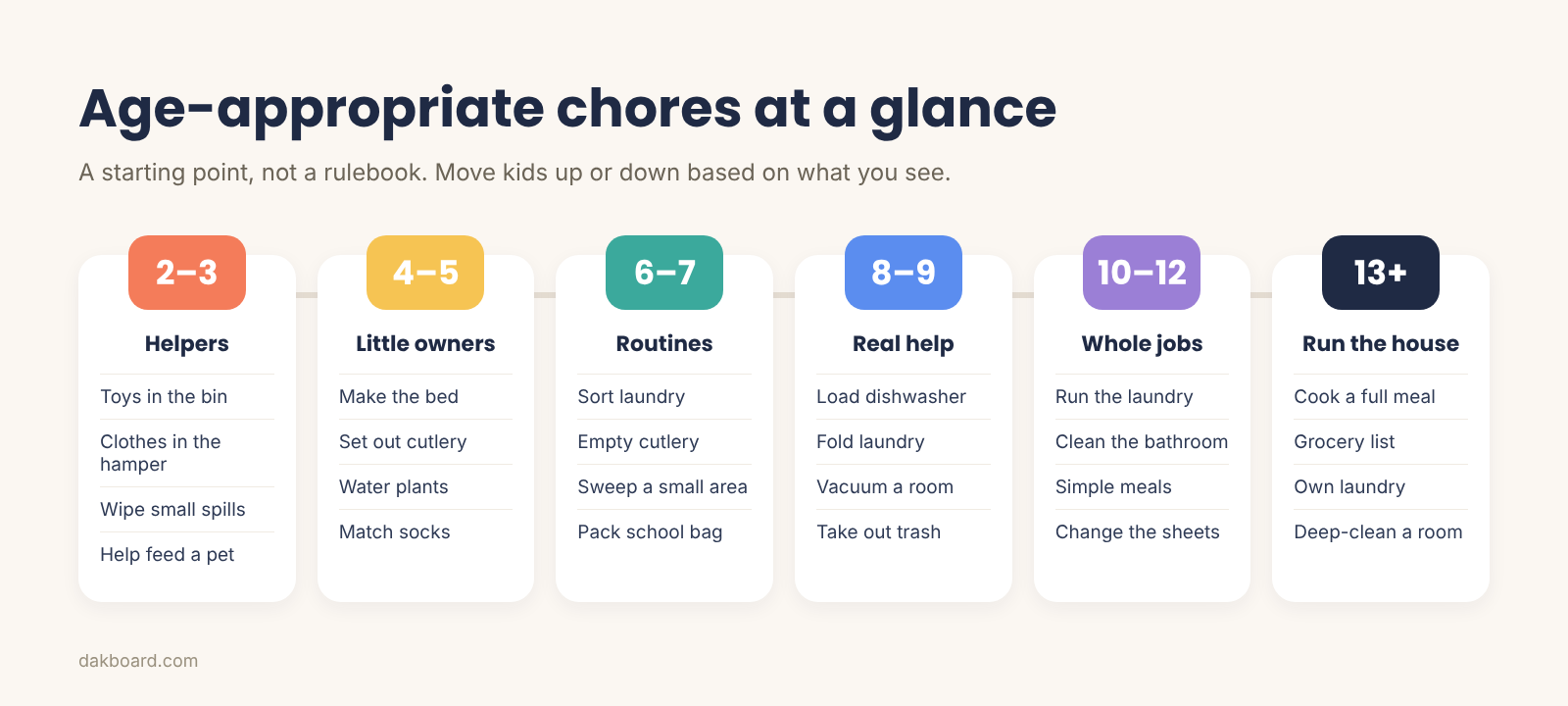
Age-appropriate chores at a glance
| Age | Chores most kids can handle |
|---|---|
| 2–3 | Put toys in a bin, put clothes in the hamper, wipe small spills, help feed a pet |
| 4–5 | Make the bed (roughly), set out napkins and cutlery, match socks, water plants, clear their own plate |
| 6–7 | Make the bed properly, sort laundry by color, empty the cutlery from the dishwasher, sweep a small area, pack their school bag |
| 8–9 | Load the dishwasher, fold and put away laundry, vacuum a room, take out the trash and recycling, help cook with supervision |
| 10–12 | Clean a bathroom sink and toilet, run a load of laundry start to finish, make simple meals, change their bed sheets |
| 13+ | Cook a full meal, plan the grocery list, do their own laundry every week, deep-clean a room, help with yard work |
Of course, every child is different, and you know your child best. Treat these ages as a starting point, and move a child up or down a row based on what you see.
Chores for toddlers (ages 2–3)
At this age, chores are more about building some personal organization and helpful habits. Toddlers love copying adults, so give them real, tiny versions of what you’re doing.
- Put toys back in a bin
- Put dirty clothes in the hamper
- Wipe up small spills with a cloth
- Hand you items while you unload groceries (unbreakable groceries)
- Help pour pet food with your hand on the scoop
What makes it stick: doing it together, every time, and praising the effort rather than the result.
Chores for preschoolers (ages 4–5)
Preschoolers can start owning a few jobs on their own. And this is where color-coded charts and home organization tools become especially helpful.
- Make their bed (a pulled-up duvet counts)
- Set the table with napkins and cutlery
- Match clean socks
- Water plants
- Clear their own plate after meals
- Dust low surfaces with a sock on their hand
What makes it stick: a picture chart with three or four jobs and same-day stickers.
Chores for ages 6–7
Kids this age can follow a two- or three-step job and start doing routines without reminders.
- Make the bed properly
- Sort laundry into lights and darks
- Empty the cutlery basket from the dishwasher
- Sweep a small area with a dustpan and brush
- Feed a pet every day
- Pack their own school bag the night before
What makes it stick: a morning and evening checklist, ticked off in order.
Chores for 8-year-olds (and 9-year-olds)
This is the moment where kids’ chores start to genuinely lighten your load. Most 8-year-olds can handle multi-step jobs with a quick demonstration first.
- Load the dishwasher
- Fold laundry and put it away
- Vacuum their bedroom or the living room
- Take out the trash and recycling
- Help cook a meal: washing vegetables, measuring, stirring with supervision
- Rake leaves or pull weeds
- Put away the groceries
What makes it stick: a points system, where bigger jobs are worth more and points add up to rewards your child helped choose.
Chores for 10-year-olds (ages 10–12)
By 10, most kids can do nearly every routine job in the house if they’ve been taught how. The focus shifts from “helping” to owning a whole job from start to finish.
- Clean the bathroom sink, mirror and toilet
- Run a load of laundry start to finish
- Make simple meals: eggs, sandwiches, pasta
- Change their own bed sheets
- Wash dishes by hand
- Wipe down kitchen counters and the stovetop (when it’s cool)
- Walk the dog
What makes it stick: give them a whole area to own (“the bathroom is yours on Saturdays”) rather than a list of small tasks.
Chores for teenagers (13+)
Teens can do everything an adult does around the house. The goal now is independence: by the time they leave home, they should be able to run one (or at the very least, not let the plants die or run out of clean clothes on the first month).
- Plan and cook a full family meal once a week
- Write the grocery list and help shop
- Do all their own laundry
- Deep-clean the kitchen or a bathroom
- Mow the lawn or do heavier yard work
- Wash the car
- Help younger siblings with homework or routines
What makes it stick: treat it like a job. Teens respond to clear expectations and some say in which jobs they take. Many families pay for extra jobs beyond the basics.
A few safety notes
- Keep cleaning chemicals for kids 10 and up, and only with clear instructions. Younger kids can use water and a cloth.
- Knives, stoves and ovens need supervision until you’re confident in your child’s skills, whatever their age.
- The American Academy of Pediatrics recommends kids be at least 12 to use a walk-behind lawn mower and 16 for a ride-on mower.
How to make chores by age actually work
- Teach once, together. Do the job side by side the first few times before expecting it alone.
- Lower the bar on “perfect”. A bed made by a 6-year-old looks like a bed made by a 6-year-old.
- Give jobs, not just tasks. “Feed the dog every morning” builds ownership. “Can you help for a minute?” doesn’t.
- Make it visible. A chore chart where everyone can see it keeps chores from living only in a parent’s head.
- Move kids up as they grow. Check the list every few months and add one new job.
Keep every kid’s chores in one place
With several kids at different ages, you end up with several different lists. DAKboard is a smart wall display that shows your family’s calendar, photos and to-dos on one screen in the kitchen. Its Chores app puts every child’s chores there too, each in their own column, next to the family calendar. Kids tap a chore when it’s done, points add up on their own, and repeating chores come back on their own when they’re next due.
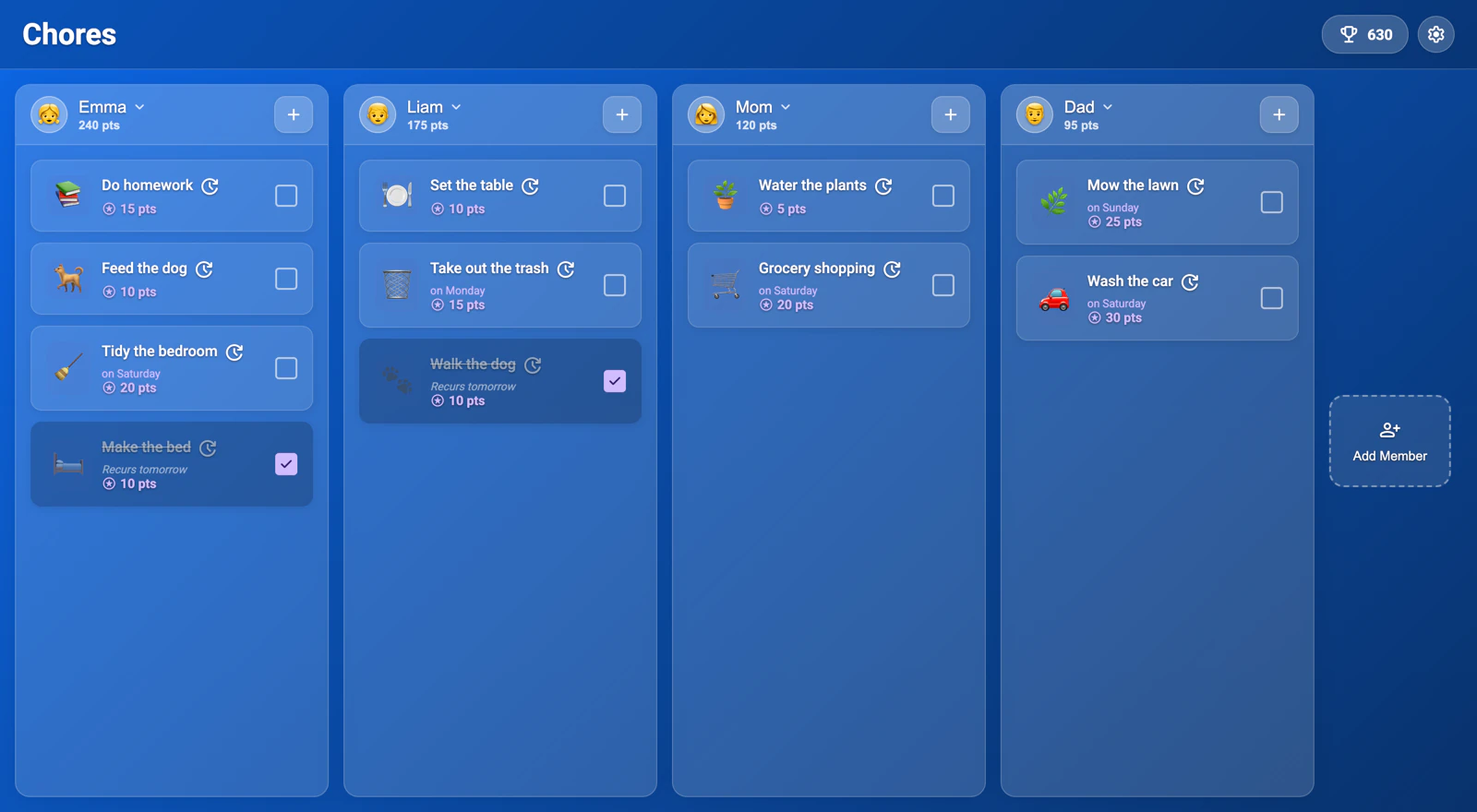
Tapping chores needs a touchscreen, like a DAKboard Wall Display or an Android tablet. Chores is part of the Essential and Plus plans. See how DAKboard works for busy families, or shop the Wall Displays.
Want to see how it works first? Read the DAKboard Chores guide.
And don’t forget the grown-ups: our chore chart for adults shows how to split the rest of the housework fairly.
Frequently asked questions
At what age should kids start doing chores? Around 2. At that age, chores are really “helping”: putting toys in a bin or clothes in the hamper alongside you. From 3 or 4, most kids can own a few small jobs of their own, especially with a picture chart to follow.
How many chores should a child have? Three to five regular jobs is plenty for most kids under 10. Older kids can own a whole area of the house instead.
What if my child refuses to do chores? Start smaller and make it predictable. Cut the list to one or two jobs, do them together at first, and tie them to the routine (“toys away before dinner”) so it isn’t a fresh negotiation every day. Praise the effort when it happens. If the refusals don’t stop, check that the jobs aren’t too hard or too vague for their age.
Should siblings of different ages get the same chores? Not the same, but fair. Give each child jobs that fit their age, and let older kids take on bigger ones, with more points or a higher allowance to match. For jobs anyone can do, like clearing the table, a weekly rotation stops the “why do I always get the dishes?” argument.
Should kids be paid for chores? Families differ. A common approach is to keep everyday chores unpaid, because everyone helps run the home, and pay for extra jobs.